
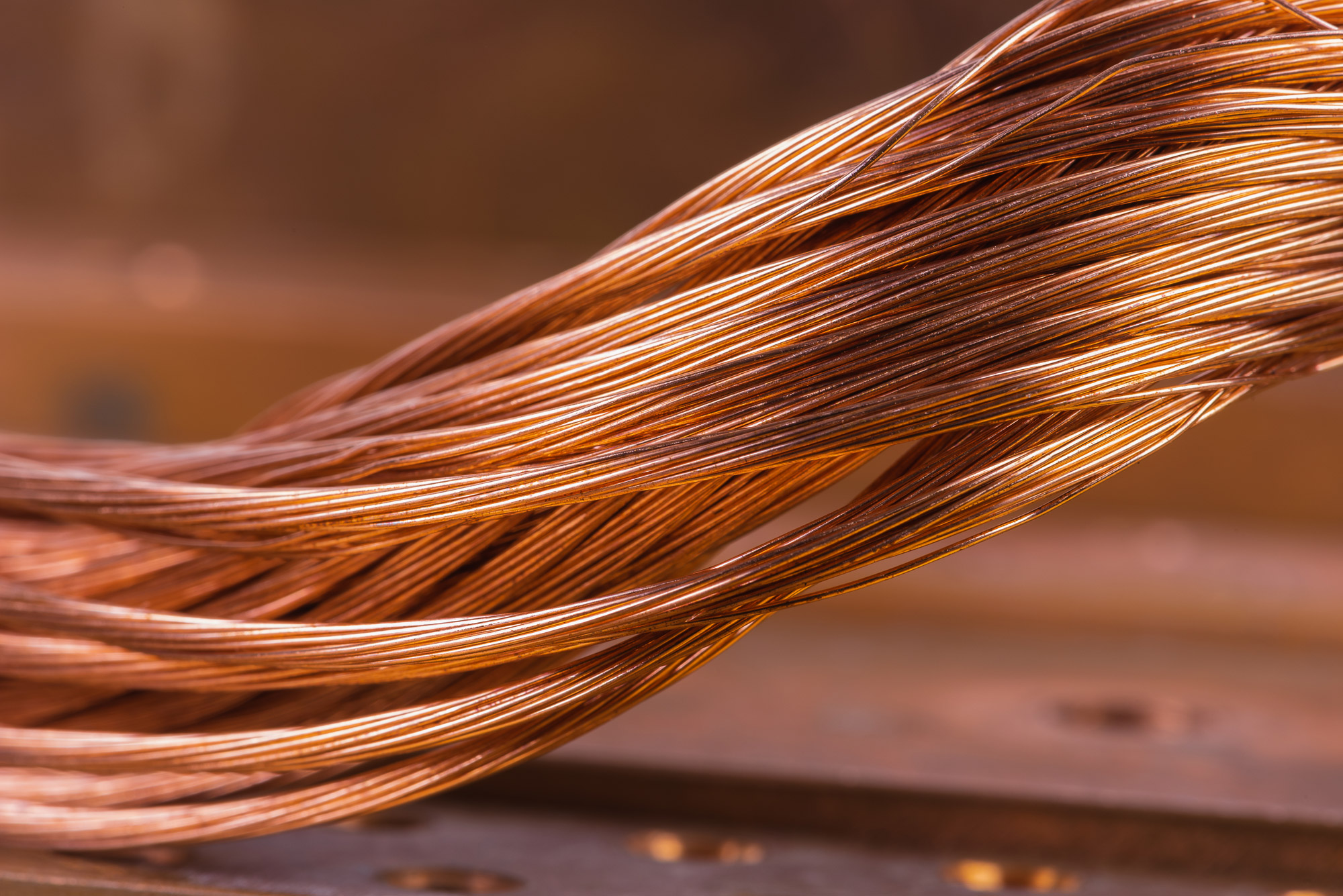
Copper was one of the first metals discovered and was the major component in bronze. It can occur as native metal and is unusual as one of the few metals that is not grey or silver coloured.
Copper’s superior electrical and thermal conductivity—surpassed only by silver—makes copper essential in electrical wiring, electronics, and heat exchange applications. Copper’s malleability and ductility allow for its extensive use in various products, from electrical wires to architectural elements. The metal’s corrosion resistance enhances its longevity in applications prone to weathering or other corrosive elements, such as plumbing, roofing, and marine uses. Additionally, copper’s antimicrobial properties offer health benefits by reducing the spread of infections in healthcare settings and public spaces.
Copper has widespread use in the automotive and aerospace industries, particularly in wiring, cooling systems, and increasingly in EV batteries and components. Similarly, in the realm of renewable energy, copper is key to the efficiency and functionality of solar panels, wind turbines, and other green technologies. Copper’s indispensable role in virtually all renewable energy technologies and infrastructure earmarks it as a crucial component in achieving a low-carbon future.
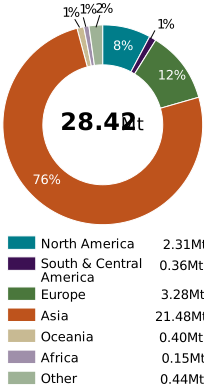
The global primary supply of copper is concentrated in several key countries, chiefly Chile, Peru, China, the United States, the DRC and Indonesia. China is both the largest producer of refined copper and the largest market.
Copper demand 2025

The engine of a Tesla Model S may contain up to three to four times more copper than an internal combustion engine./