

We will deliver on our commitment to peoples’ rights: through respecting stakeholders, including their culture, heritage and future; to our own people: ensuring they are safe and healthy, included, respected, listened to and valued; and societal trust: through co-creating vibrant ecosystems for robust social capital.

PEOPLE
Highlights from 2025
![Cogs [icon]](https://www.sibanyestillwater.com/wp-content/uploads/2020/04/icon-cogs.svg)
Training & development
R1bn
/ 29.5m hours
![Cogs [icon]](https://www.sibanyestillwater.com/wp-content/uploads/2020/04/icon-gold-costs.svg)
Wages and salaries paid
R31 billion
/ US$1.7 billion

Values focused
Strengthening communication and culture through our iCARES shared values

Recognition
Sibanye-Stillwater Academy won the Mining Qualifications Authority South Africa’s the Good Practice award

Workforce
72,668
employees and contractors

18.8%
of all employees are female
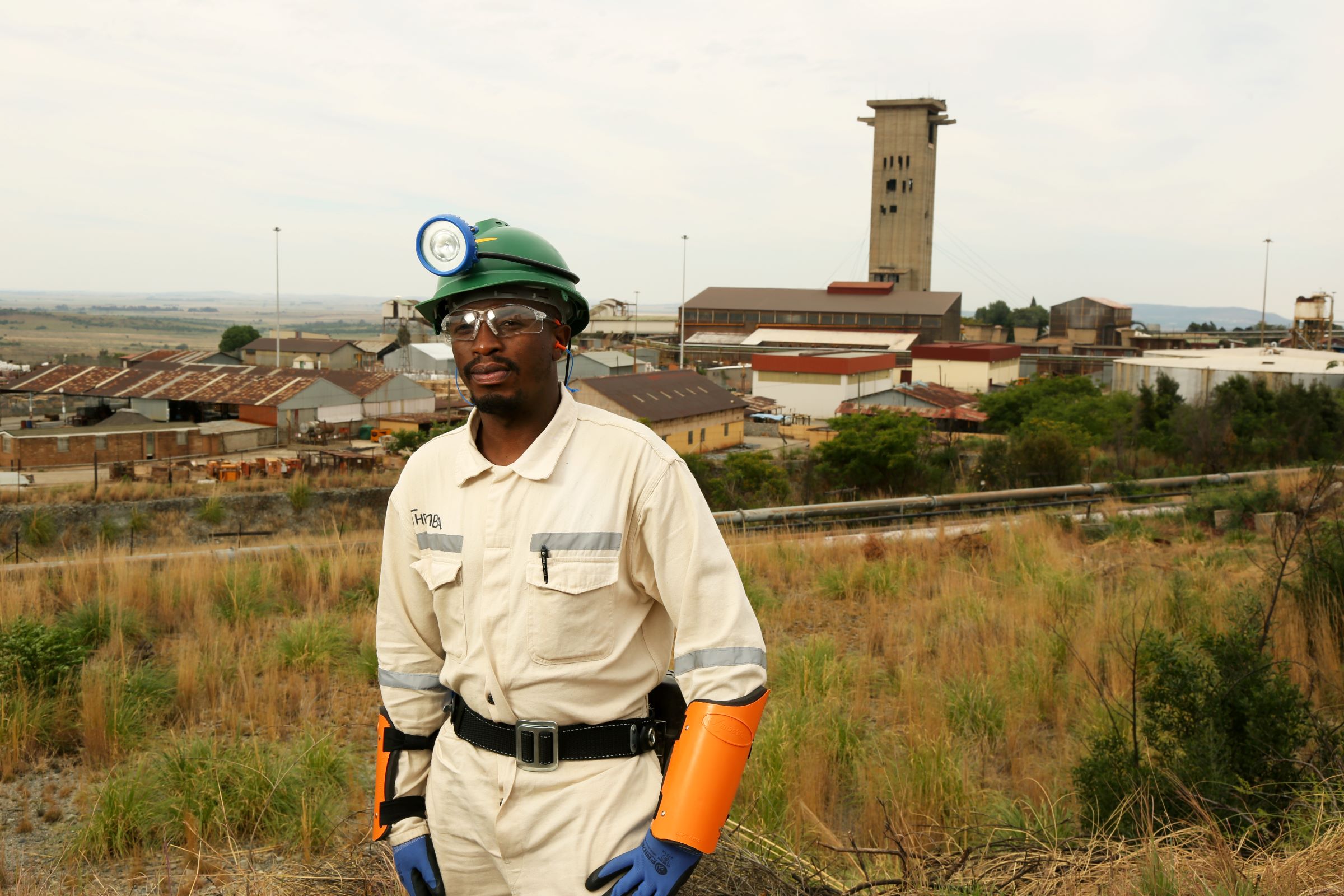
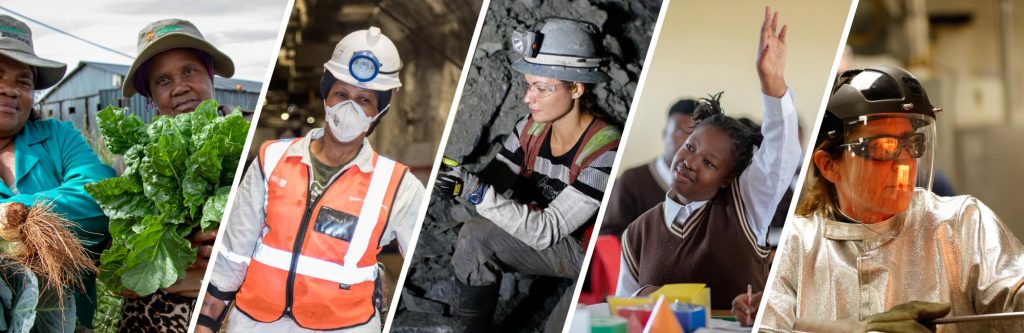
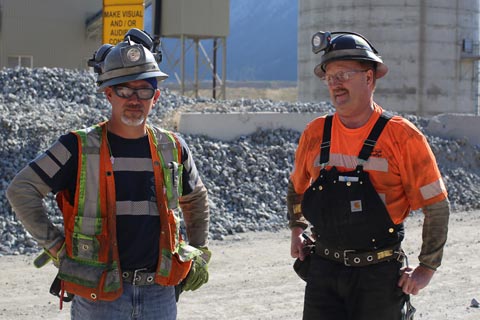
Sibanye-Stillwater is a labour-intensive business, employing and contracting almost 72,700 people across multiple continents in a wide variety of trades and professions from miners to mechanics, accountants, geologists, IT specialists and more. We recognise that the workforce are our key asset, because our employees drives performance, holds the technical skills, problem-solving abilities, enables innovation and generates long term value. Employees, therefore, are integral to the achievement of our operational targets and, ultimately, to the successful delivery of our vision to be a leader in creating shared value for all stakeholders.
We pay competitive salaries that, in addition to a basic wage, include significant variable incentives and other benefits, which enable our employees to provide for their families and indirectly, the broader community. Sibanye-Stillwater provides employment and rewarding career growth opportunities as well as opportunities for personal development.
Recruiting from local communities is a priority with the salaries and wages paid enabling employees to provide for their families, and by extension, to contribute economically to the broader community.
Our human resources model is designed to help us achieve our business strategy and promote an iCARES values-based organisation. Our people strategy includes leadership development and training programmes, as well as executive development designed to develop a pool of effective and aligned leaders, encompassing coaching, leading for impact, strategy, transformation and stakeholder engagement.
Our aim is to enrich every employee with the essential competencies and tools necessary for optimal performance and productivity. Culture and values are material focus areas and we strive to instil a values-based culture where the foundation of decision-making and behaviour is our iCARES values: namely, innovation, commitment, accountability, respect, enabling and safety.
A Closer look
At Sibanye-Stillwater, we adopt an integrated and holistic approach to talent management, aiming to fill 80% of vacant positions through internal recruitment. We invest significantly in our employees, with 29.5 million training hours and R1 billion invested in training and development programs that not only enhance safe working practices but also nurture talent and provide opportunities for professional growth.
Our career growth model and career paths are designed to foster career development through a series of interventions, including skills training, lateral critical experiences, and advancement to higher job responsibilities and cross-functional roles within the Group. We are dedicated to supporting our employees’ career paths and identifying and nurturing talent. Employees are encouraged to set career development goals or individual development plans (IDPs).
In South Africa, our talent management initiatives are crucial in addressing the shortage of mining skills. Our career development, progression, and promotion targets are integral to our Social and Labour Plan (SLP) commitments, reflecting our dedication to sustainable talent development and community engagement.
Furthermore, we prioritise recruiting from local communities, recognising that the salaries and wages we provide enable our employees to support their families and contribute to the broader community economically. Our human resources model aligns with our business strategy and promotes a values-based organisation, underpinned by our iCARES values: commitment, accountability, respect, enabling, and safety.
We are committed to enriching every employee with the essential competencies and tools necessary for optimal performance and productivity, instilling a values-based culture where decision-making and behaviour are founded on our iCARES values.
Inclusivity is essential for Sibanye-Stillwater in driving value creation. The Group aims to reflect host community demographics and encourage female participation at all levels. Commitment to transformation is evident in employment equity, gender equality, enterprise development, procurement, and community initiatives.
Building on our earlier Diversity, Equity, Inclusion and Belonging (DEIB) foundation, we have intentionally progressed to a broader Inclusivity Group Accountability Framework that integrates culture, values, leadership behaviour, and accountability to create a workplace where people can belong, contribute, and perform at their best.
Targets include achieving an increase the overall percentage women in mining to 18.8% in 2025 for the Group and an increase women in management to 29.4% (both targets are at base year 2023).
In South Africa, efforts to identify, develop, and retain historically disadvantaged individuals are ongoing, with a notable percentage of the workforce in core and critical skills roles. For 2025, 1.21% of our workforce are employees with disabilities. The targets for representation of historically disadvantaged persons (HDPs) in 2025 were met for Middle (60% target, achieved 66.3%) and junior management (70% target, achieved 80.6%).
Sibanye-Stillwater continues to offer competitive wages and benefits, tailored to local circumstances and individual needs across different operating jursidictions.
In South Africa, the focus remains on providing affordable housing for employees where possible. Employees who do not reside in company accommodation receive a living out allowance. In 2025, the company provided single room accommodation for approximately 8,888 employees and 9,871 family units.
The home ownership programme, launched in 2015, has yielded 2,377 employee and 348 private home owners. Our success in this programme can largely be ascribed to the model that we deployed, being a standard 20% discount (as per the property valuation) with another 1% discount for each year of consecutive service with the firm. This programme has indeed enabled our employees not only to invest in the property market, but in so doing, derive potential future value and dignity as part of their family legacy.
| Key salary and wage metrics | SA operations | US operations | AUS operations |
| Employee wages and benefits paid (R million) | 26,489 | 3,647 | 635 |
| Average salary per entry-level employee1 | R261,689 per annum | US$61,271 per annum | A$170,546 per annum |
| Annual training spend (R/US$/€/A$ million)1 | 1,016 | 0.33 | 0.59 |
- Exchange rate for US$/R17.88, A$/R11.52. See Remuneration report 2025, page 86 for the average pay at operator level (Category 4-8).
We strive to maintain positive relationships with both unionised and non-unionised employees. We respect workers’ rights, including freedom of association, the right to peaceful protest and assembly and engagement in collective bargaining. Formal employee engagement structures are in place at all our operations – from shaft and operational levels to those at the management level.
Sibanye-Stillwater, through the Matshediso programme, Lonmin Memorial Fund and the Sixteen-Eight Memorial Trust (originally established after the 2012 Marikana tragedy), provides financial assistance to the families and dependants of employees who are severely disabled or fatally injured in mine accidents. This includes covering costs (such as transport) for funerals and memorials.
References
- Group impact supplement 2025
- Sustainability report 2025: People and prosperity
- Fact sheet: Care for iMali: Taking care of personal finance
- Complaints and grievance procedure
- Policy statement: Health and safety
- Policy statement: Security
- Board Diversity Policy
- Stakeholder Engagement Policy
- Human Rights Policy